
Phnom Penh, Cambodia to AEDT
AEDT is not used on May 15, 2026
This converter uses AEST for eastern Australia.
Compare Phnom Penh time with AEDT time, including current local time, UTC offsets, time difference, daylight saving changes, working hours, and shareable meeting times.
Time Difference
ICT (Indochina Time) is 3 hours behind Australian Eastern Standard Time
10:00 am10:00 in Phnom Penh, Cambodia is 1:00 pm13:00 in AEST
Phnom Penh to AEST call time
Best time for a conference call or a meeting is between 9am-2pm in Phnom Penh which corresponds to 12pm-5pm in AEST
10:00 am10:00 ICT (Indochina Time) (Phnom Penh, Cambodia). Offset UTC +7:00 hours
1:00 pm13:00 Australian Eastern Standard Time (AEST). Offset UTC +10:00 hours
10:00 am10:00 Phnom Penh, Cambodia / 1:00 pm13:00 AEST
| Phnom Penh, Cambodia | AEST |
|---|---|
| 12am (midnight) | 3am |
| 1am | 4am |
| 2am | 5am |
| 3am | 6am |
| 4am | 7am |
| 5am | 8am |
| 6am | 9am |
| 7am | 10am |
| 8am | 11am |
| 9am | 12pm (noon) |
| 10am | 1pm |
| 11am | 2pm |
| 12pm (noon) | 3pm |
| 1pm | 4pm |
| 2pm | 5pm |
| 3pm | 6pm |
| 4pm | 7pm |
| 5pm | 8pm |
| 6pm | 9pm |
| 7pm | 10pm |
| 8pm | 11pm |
| 9pm | 12am (midnight) |
| 10pm | 1am |
| 11pm | 2am |
| 00:00 | 03:00 |
| 01:00 | 04:00 |
| 02:00 | 05:00 |
| 03:00 | 06:00 |
| 04:00 | 07:00 |
| 05:00 | 08:00 |
| 06:00 | 09:00 |
| 07:00 | 10:00 |
| 08:00 | 11:00 |
| 09:00 | 12:00 |
| 10:00 | 13:00 |
| 11:00 | 14:00 |
| 12:00 | 15:00 |
| 13:00 | 16:00 |
| 14:00 | 17:00 |
| 15:00 | 18:00 |
| 16:00 | 19:00 |
| 17:00 | 20:00 |
| 18:00 | 21:00 |
| 19:00 | 22:00 |
| 20:00 | 23:00 |
| 21:00 | 00:00 |
| 22:00 | 01:00 |
| 23:00 | 02:00 |
Phnom Penh Information
Time Zone
Phnom Penh Facts
Australian Eastern Daylight Time
Offset: AEDT is 11 hours ahead Greenwich Mean Time (GMT) and is used in Australia
Countries using this time zone: Australia
Principal Cities: The largest city in the AEDT time zone is Sydney in Australia, with about 4.627 million people. Other major cities in this time zone include Melbourne, Canberra, Newcastle, Wollongong.

Daylight Saving: Australian Eastern Daylight Time (AEDT) is a daylight saving/summer time zone, but some places set clocks back one hour during winter and observe Australian Eastern Standard Time (AEST).
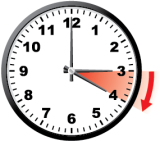 End: Australian Eastern Daylight Time (AEDT) ended on Sunday, April 5, 2026 at 3:00 am local time and clocks were set one hour back to Sunday, April 5, 2026, 2:00 am local standard time instead. Daylight saving ends annually on the first Sunday of April
 Start: Australian Eastern Daylight Time (AEDT) starts on Sunday, October 4, 2026 at 2:00 am local time and clocks are set one hour forward to Sunday, October 4, 2026, 3:00 am. Daylight saving starts annually on the first Sunday of October
Australian Eastern Daylight Time (AEDT) is observer in New South Wales (except Broken Hill and Lord Howe Island), Victoria, Tasmania, Australian Capital Territory, Sydney, Melbourne, Hobart, Canberra AEDT is equal to Coordinated Universal Time plus 11 hours (UTC +11). During a summer time period, these locations move from AEST to Australian Eastern Daylight Time (AEDT), and clocks are advanced to UTC +11.
Daylight saving or summer time is commonly expressed as AEDT (Australian Eastern Daylight Time). In periods of daylight saving an hour is added to the Local Standard Time.
The regulation of time is a State Government responsibility. Changes to the period of daylight saving may be made by regulation. Legislation to harmonise daylight saving in NSW with the south-eastern states and the ACT was passed by the NSW Parliament on 23 October 2007.
History of daylight saving in New South Wales
Daylight saving operated nationally for single summer during World War I from 1 January 1917 to 25 March 1917 and during World War II for three summers in a row, starting on 1 January 1942.
Daylight saving was re-introduced for third time in New South Wales on 31 October 1971 after New South Wales Parliament passed the Standard Time Act 1971.
A referendum held on 1 May 1976 proposed that daylight saving should be on a permanent basis. The ballot paper stated:
"At present there is a period commonly called 'daylight saving' by which time is advanced by one hour for the period commencing on the last Sunday in October in each year and ending on the first Sunday in March in the following year.
Electors were then asked to answer YES or NO to the question: Are you in favour of daylight saving? 1,882,770 electors were in favour, 868,900 were against and 35,507 votes were informal.\"
The period of daylight saving is prescribed by the Daylight Saving Regulations 2008, made under the Daylight Saving Act 2007. Since April 2008, daylight saving has been synchronised across Tasmania, New South Wales, Victoria, the ACT and South Australia, although South Australia remains half an hour behind throughout the year due to the observance of Australian Central Standard Time.
Which is correct Daylight Savings or Daylight Saving (with or without the 's' at the end)? The correct spelling in Australia is without the 's'.
AEDT representations, usage and related time zones
- +11 - basic short
- +1100 - basic
- +11:00 - extended
- +1100 - sign character (+) followed by a four digit time providing hours (11) and minutes (00) of the offset. Indicates an offset of eleven hours to the east of the zero meridian.
- Lima - Military abbreviation for AEDT
- L - short form of 'Lima'
- Antarctica/Macquarie
- Australia/ACT
- Australia/Canberra
- Australia/Currie
- Australia/Hobart
- Australia/Melbourne
- Australia/NSW
- Australia/Sydney
- Australia/Tasmania
- Australia/Victoria
- AEDT - Australian Eastern Daylight Time
- BST - Bougainville Standard Time
- KOST - Kosrae Time
- L - Lima Time Zone
- LHDT - Lord Howe Daylight Time
- MAGT - Magadan Time
- NCT - New Caledonia Time
- NFT - Norfolk Time
- PETT - Kamchatka Time
- PONT - Pohnpei Standard Time
- SBT - Solomon IslandsTime
- VLAST - Vladivostok Summer Time
- VUT - Vanuatu Time